
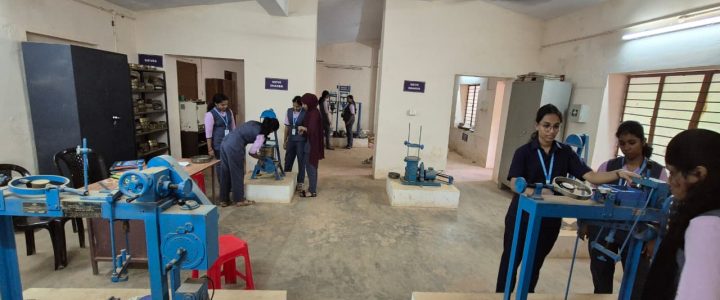
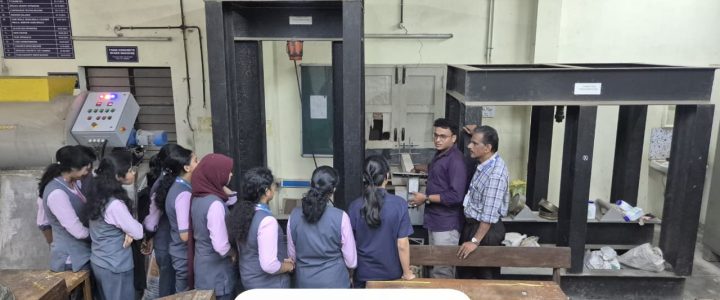
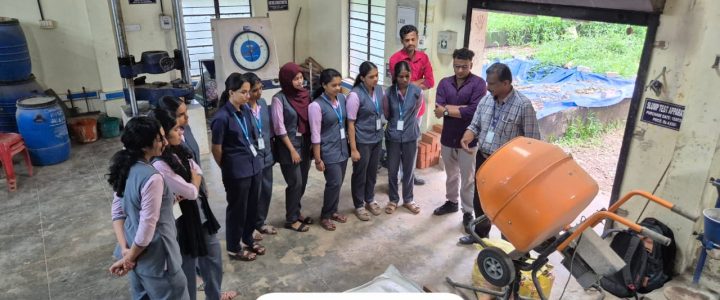
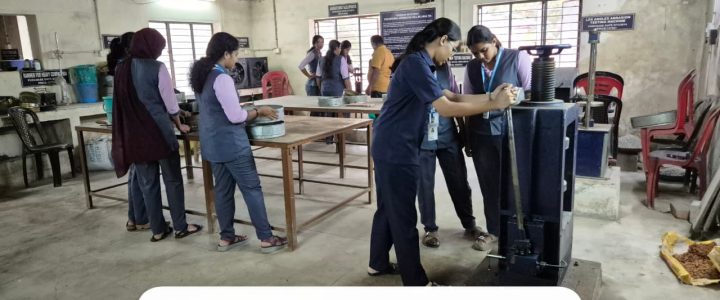
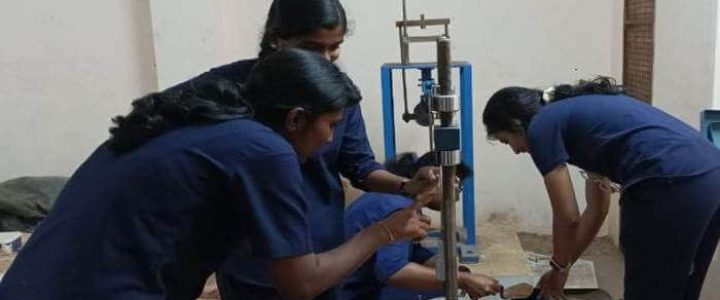
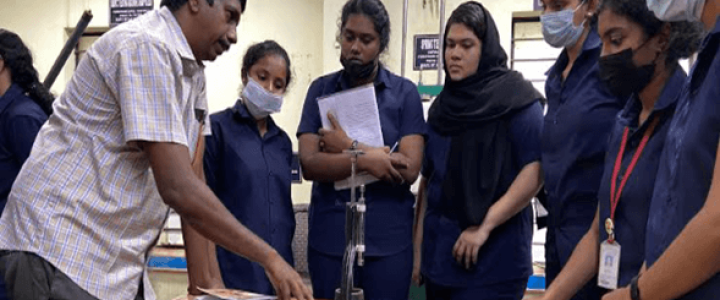
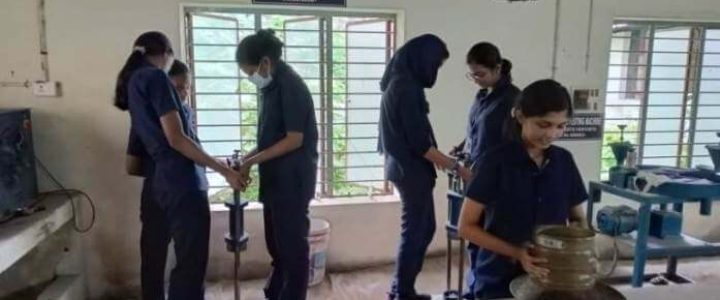

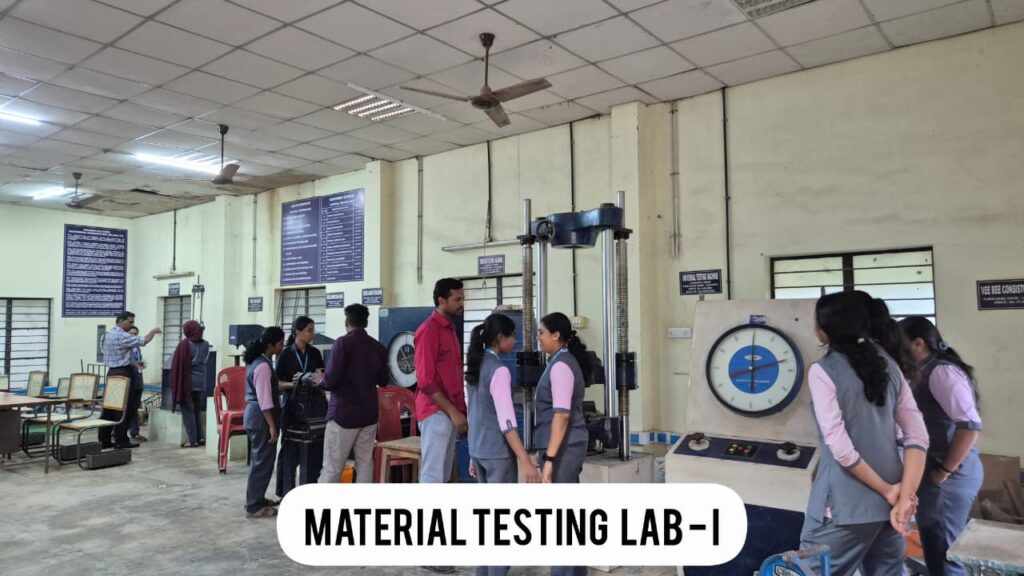
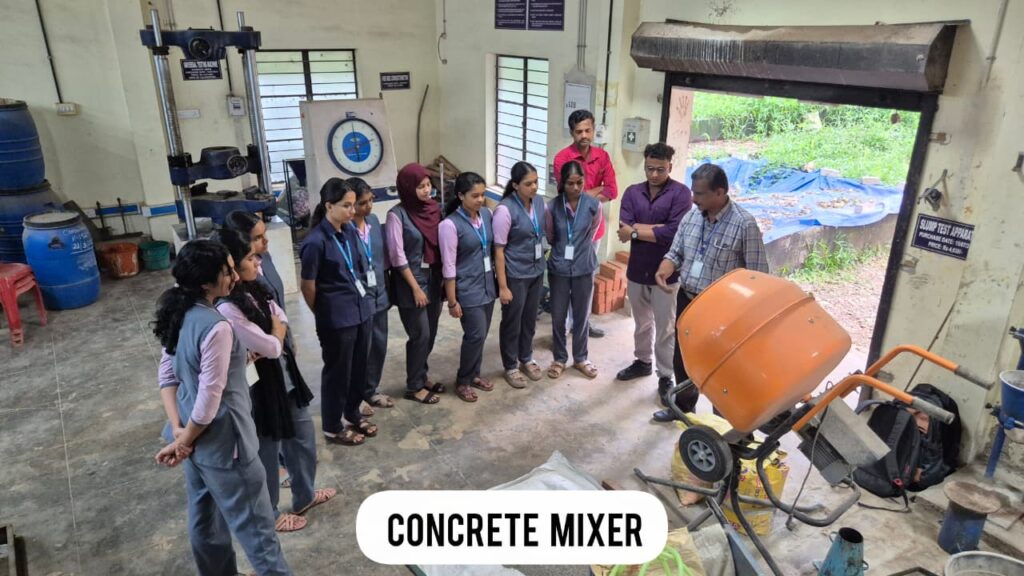
 The concrete technology lab is established to train students to carry out tests on common construction materials such as concrete, cement, tiles etc. The tests are conducted to determine the engineering properties in terms of strength, strain, fatigue, creep, elasticity, stiffness durability, and workability.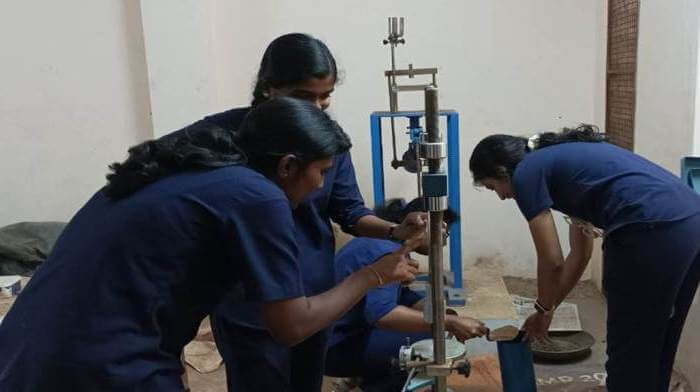
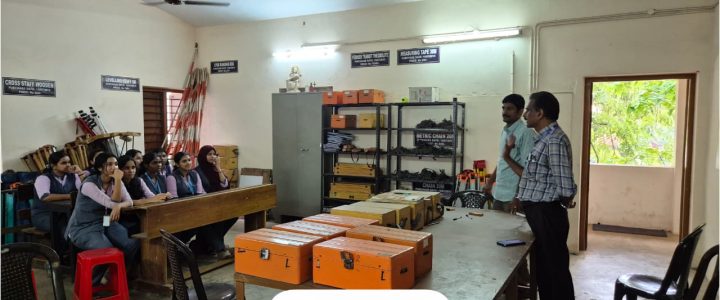
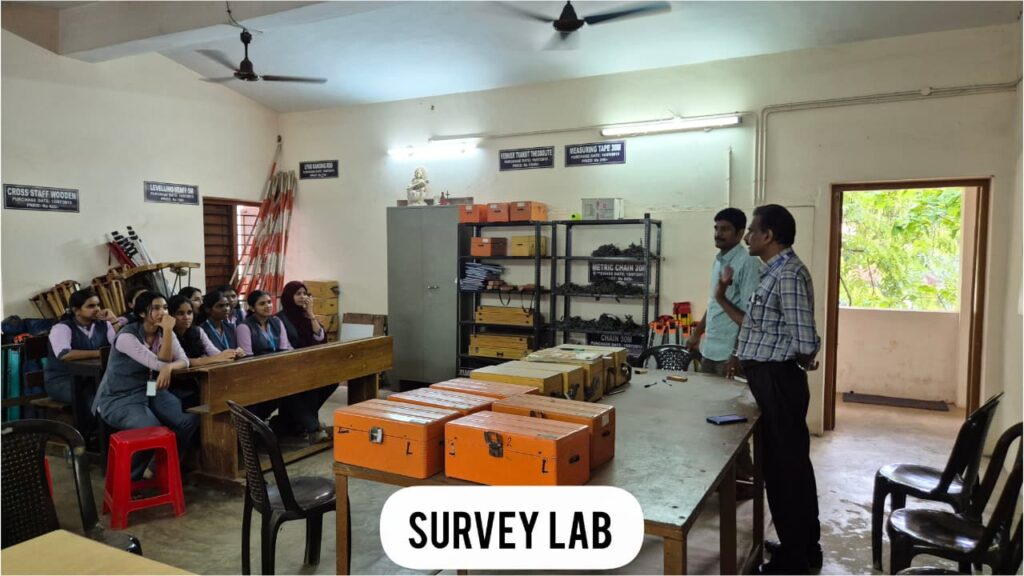 The Surveying Lab consists of an assortment of state-of-the-art equipment for performing various engineering measurements.This equipment includes four total station instruments for obtaining angle and distance measurements, Two automatic engineering levels, 10 leveling equipment’s, a number of Theodolites, Plane tables, etc. Ancillary equipment, such as tripods, reflective prisms, and level rods is also available.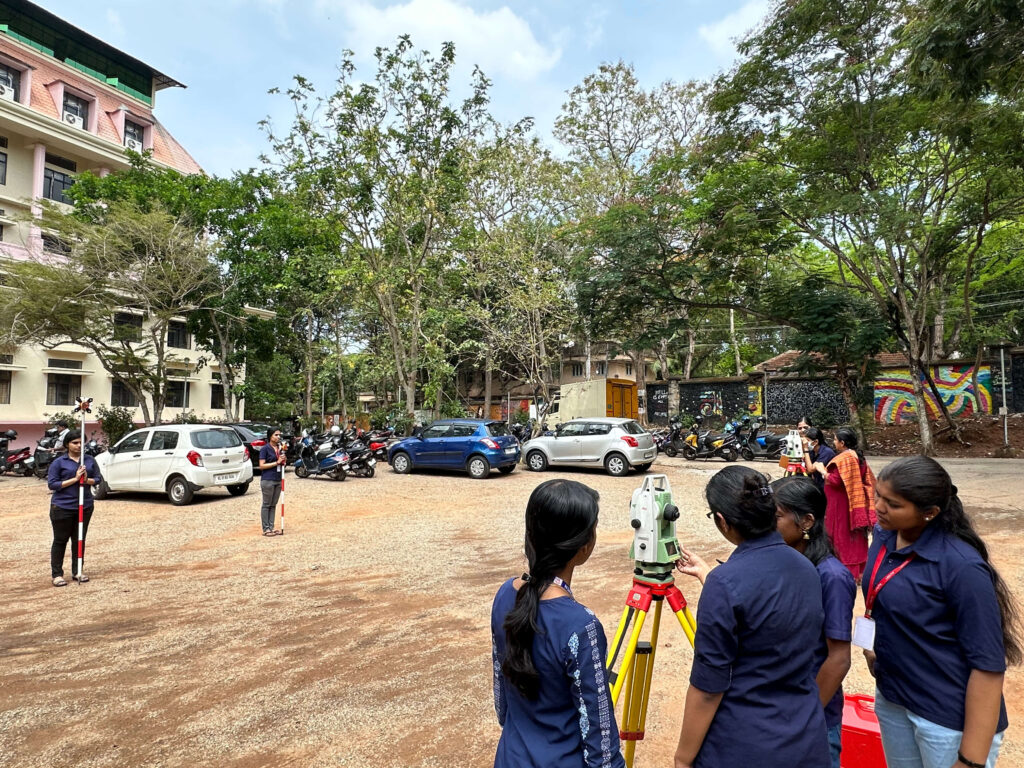
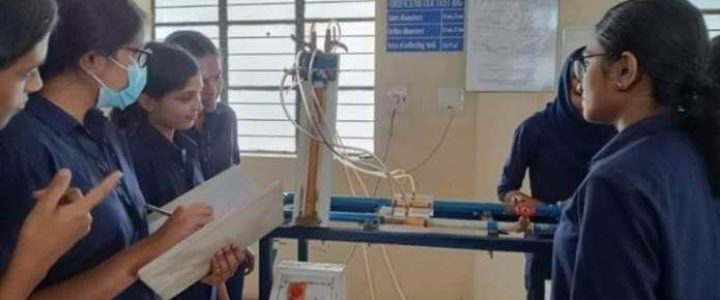
The objective of this laboratory is to determine the various parameters related to fluid flow in pipes and in open channels. At present it is equipped with hydraulic benches & various stand-alone equipment to carry out experiments like verification of the Bernoulli’s energy equation, study of transition from laminar to turbulent flow, pipeline flow, venturimeter/orifice meter, notches etc.
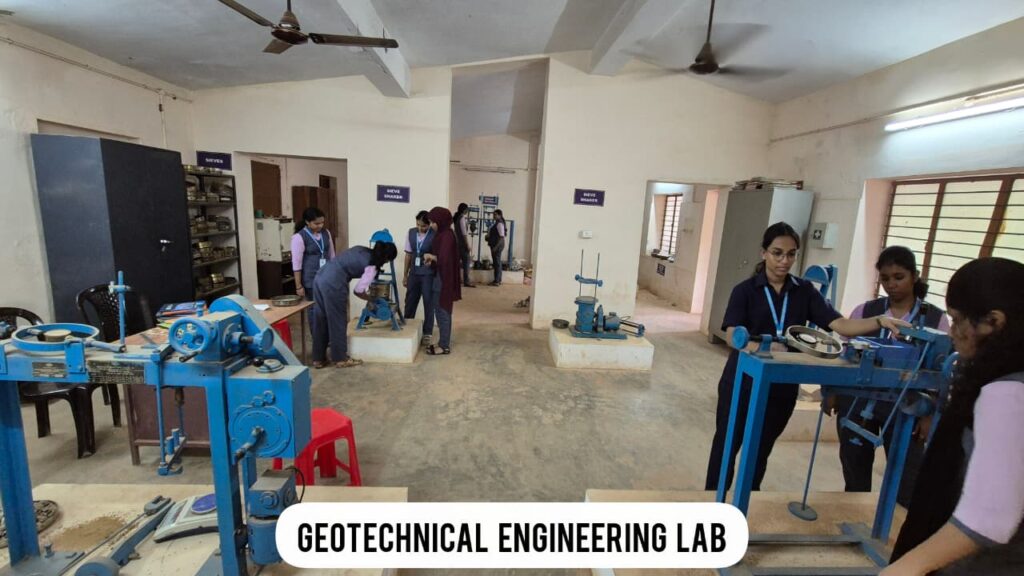 The objective of the lab is to train the students in the field of testing of soils to determine their physical , index and engineering properties of soil. The lab guides the students to conduct the test as per BIS standrads.This lab lab has the equipped to analyze CBR test, Hydrometer, Unconfined Compression Test Machine etc.
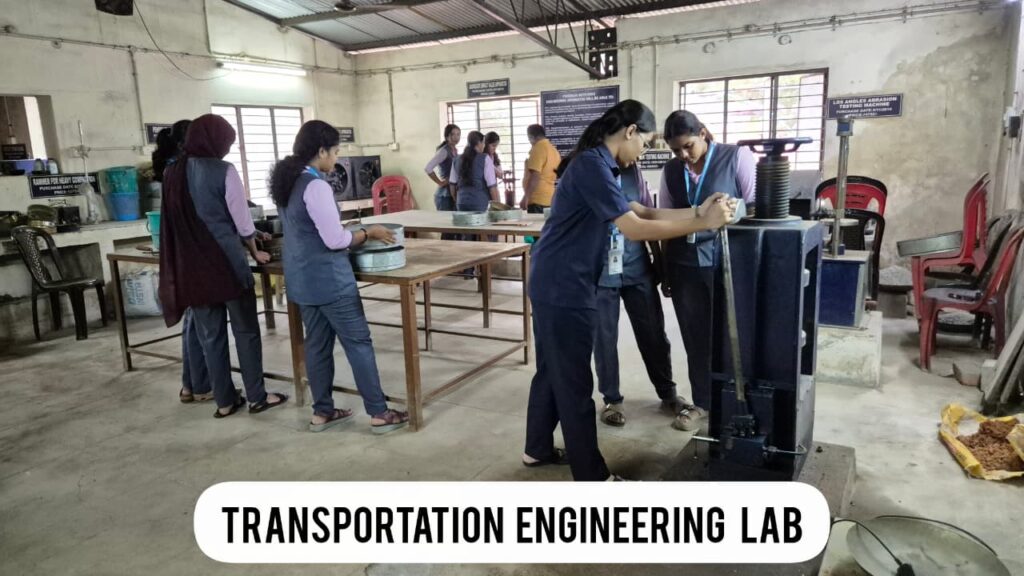 The laboratory of transportation engineering in the civil department is well equipped with all the required instruments and equipment that are helpful in the overall understanding and practical knowledge of a student. This lab is equipped with CBR, Los angles abrasion instrument,Flakiness Index and Elongation Index Test, Softening point test, Ductility Test etc.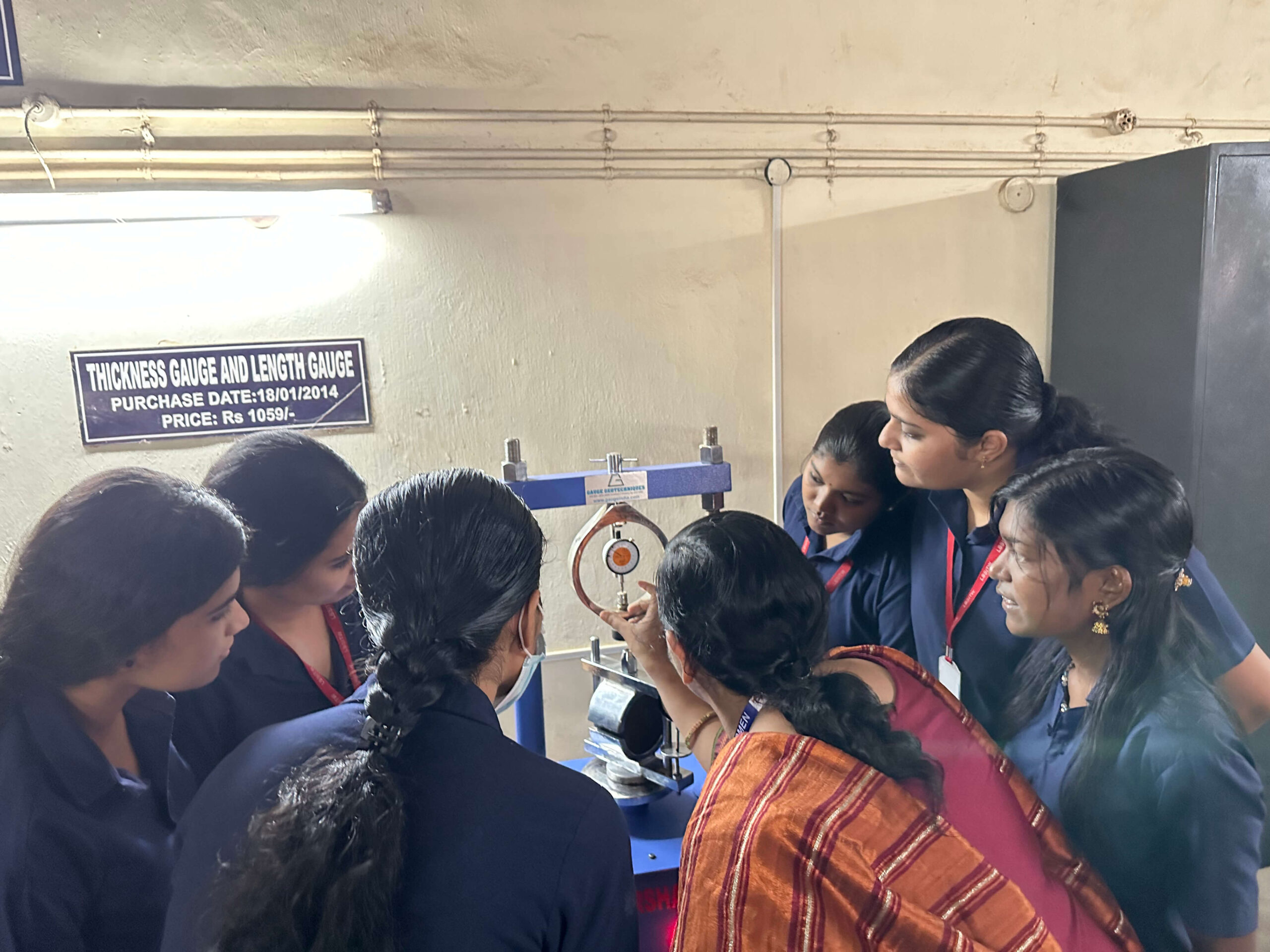
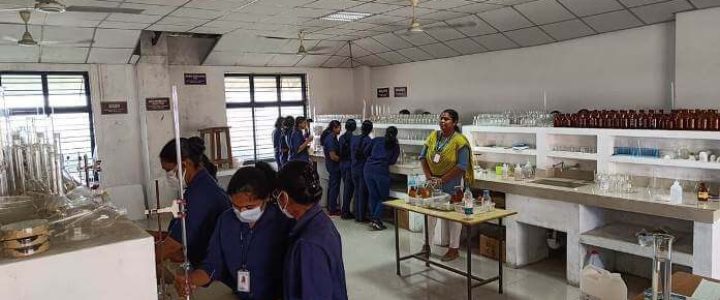
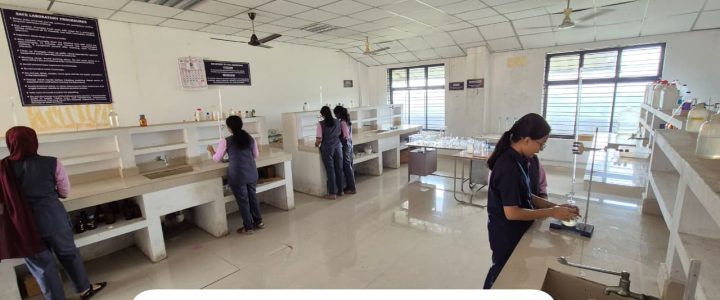
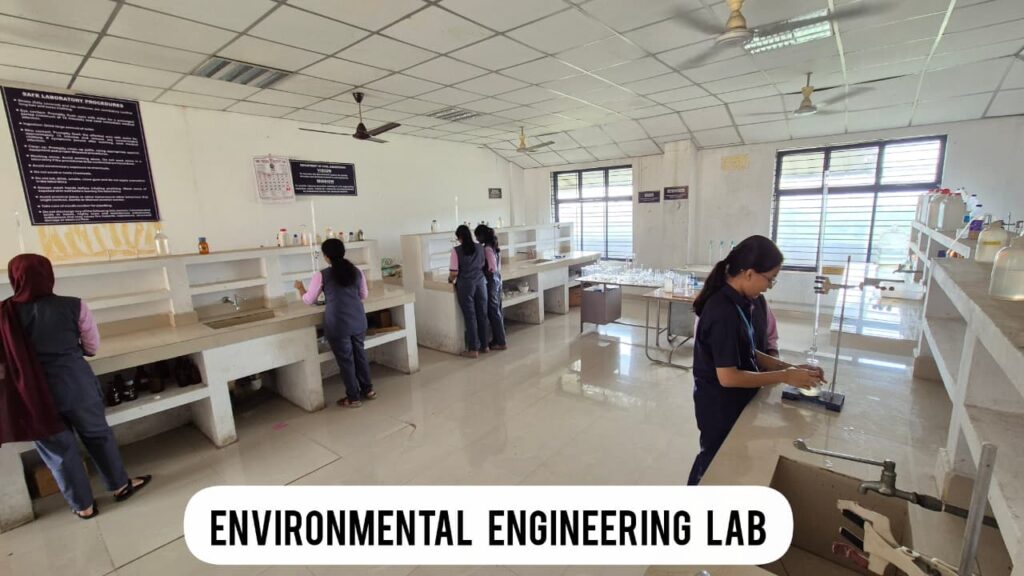 The Environmental Laboratory facilities to measurer a wide range of environmental parameters in ambient water, wastewater covering physico-chemical and bacteriological parameters, ambient air quality, noise and vibration.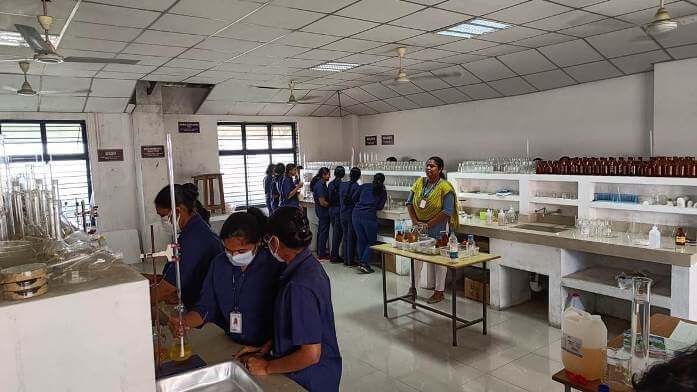
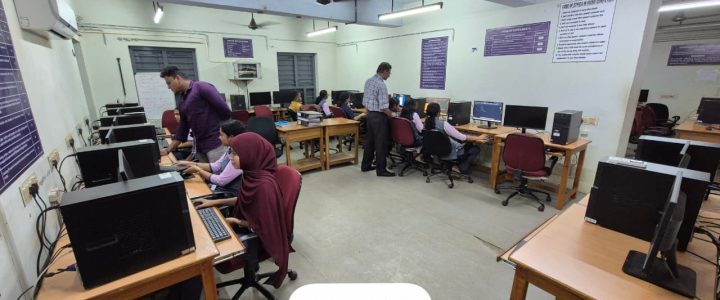
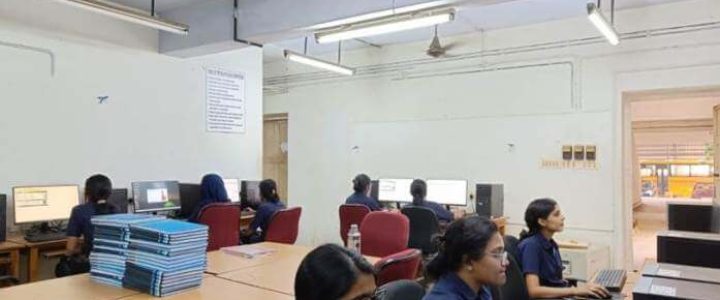
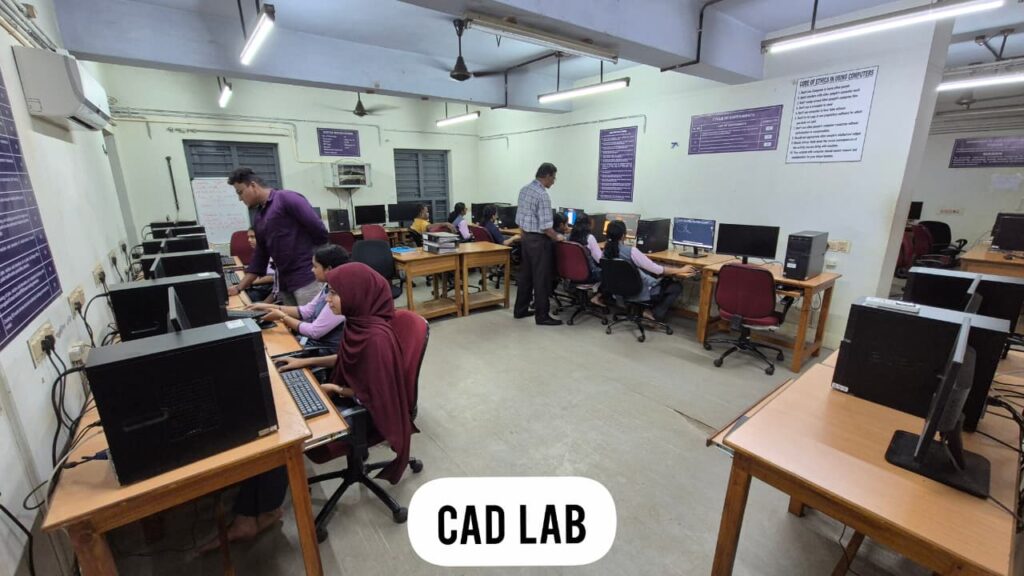 A well-equipped computer lab with advanced facilities is established for the benefit of the civil engineering students. High end terminals supported by latest hardware and software, latest visual aids, plotting devices, etc. are among them. Advanced civil engineering software are procured for making the students globally competitive and industry ready. At CAD lab, students get professional training on 2D & 3D drafting of civil engineering drawings using the latest version of AutoCAD software. Student will learn Structural modelling analyzing & designing using different structural software .
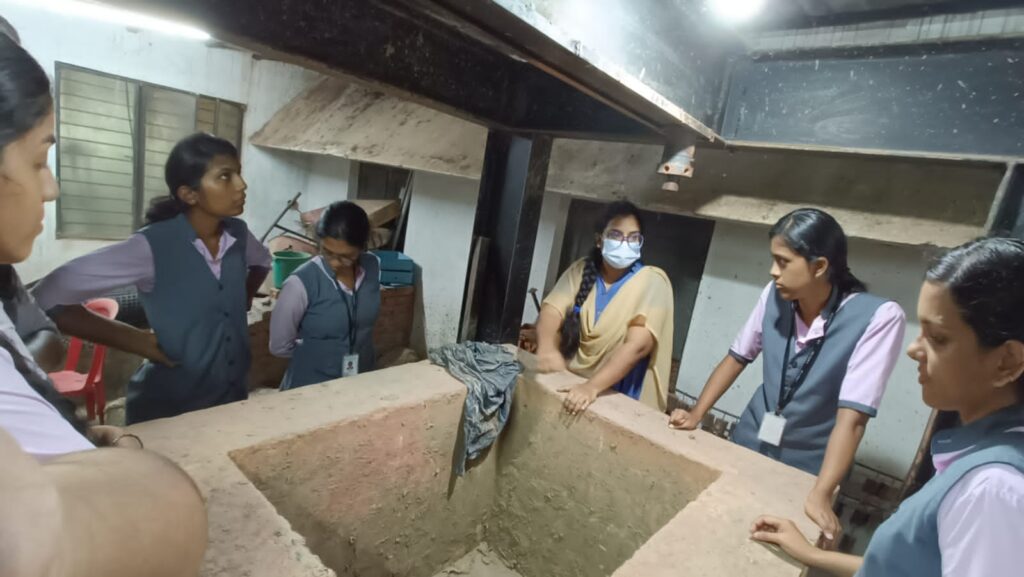
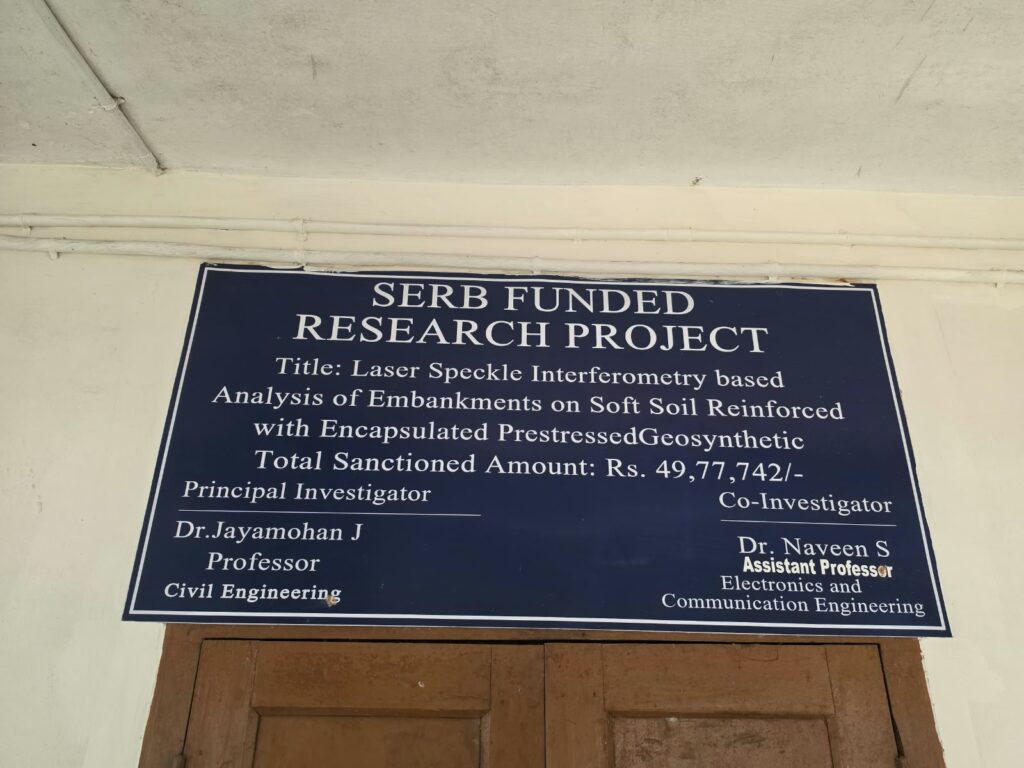 The Geotechnical Research Lab is equipped with advanced experimental facilities for research in soil and geotechnical engineering.
The laboratory houses a laboratory-scale Plate Load Test Apparatus, comprising a test tank and loading unit, which enables researchers to conduct plate load tests and evaluate the load-bearing behaviour and settlement characteristics of soils and treated ground systems.
The lab also features a Large-Scale Double Shear Test Apparatus, designed to facilitate detailed investigation of the shear behaviour and performance of soils, soil–product interfaces, and geotechnical materials.
These facilities support experimental research on soils, ground improvement techniques, geosynthetic products, and other geotechnical materials, enabling researchers to assess their engineering performance under controlled laboratory conditions.
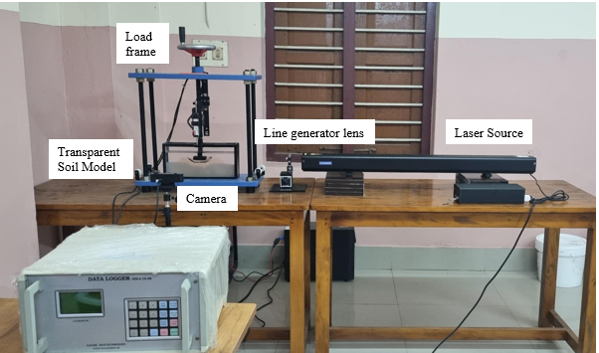
Experimental Setup and Instrumentation
The research project utilizes a specially developed optical loading frame integrated with a laboratory scale Load Test and Laser Speckle Interferometry (LSI) system for the experimental investigation of soil.
The research and project laboratories are well equipped with
– Load cells for accurate measurement of applied load
– Dial gauges for displacement measurement
– Proving rings for load measurement and calibration
– LVDTs (Linear Variable Differential Transformers) for precise displacement monitoring
– Data acquisition/data logger system for recording experimental measurements
– High-resolution digital camera for capturing detailed images of soil and model deformation
The combination of conventional instrumentation with optical measurement techniques provides a comprehensive experimental platform for studying the behaviour of soils, reinforced soil systems, geosynthetics, and ground improvement techniques.
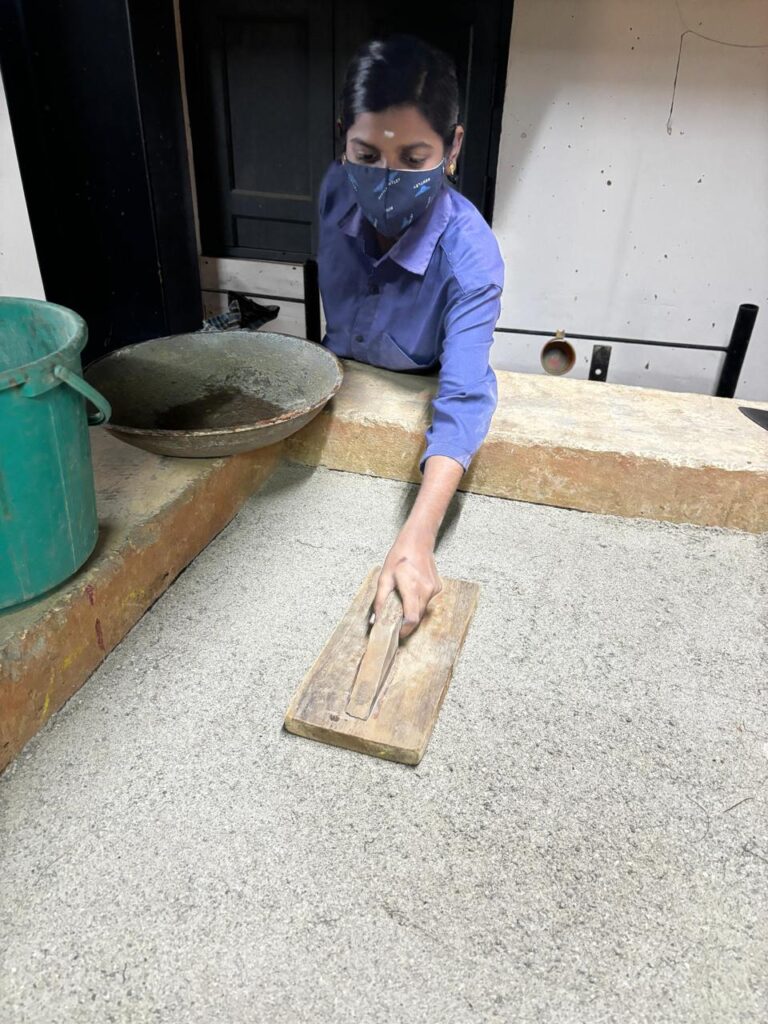
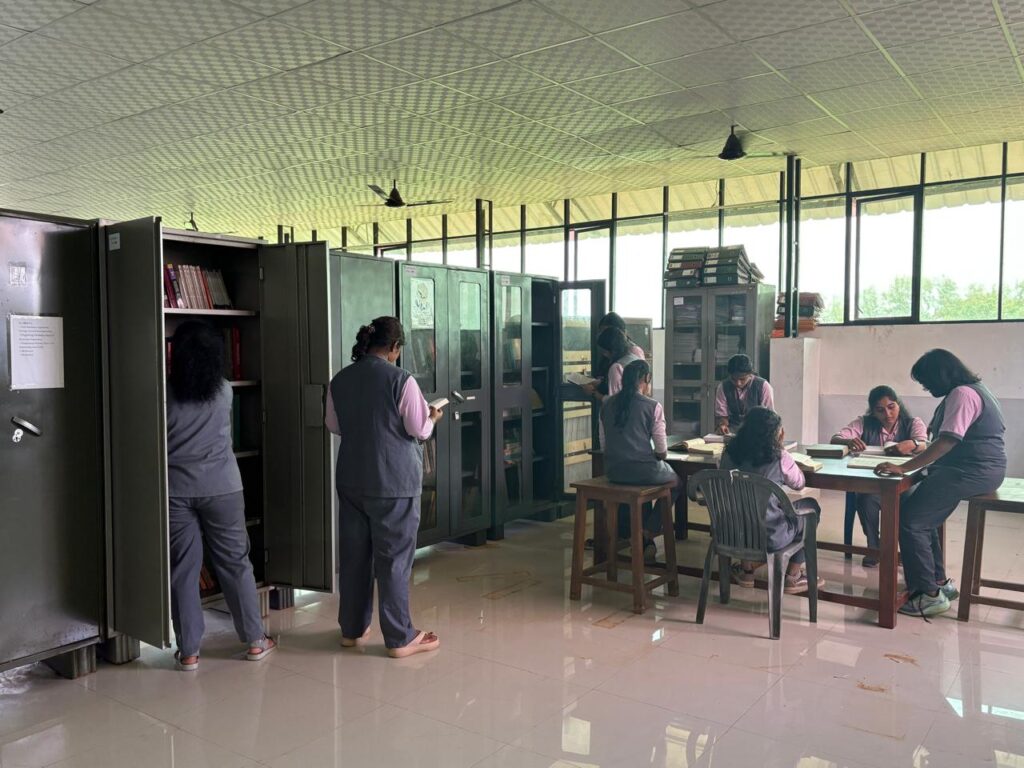 The civil department library at LBSITW College is a treasure trove of information for civil engineering enthusiasts. It offers an extensive collection of resources, including physical books and digital materials, to cater to the needs of students and faculty members. The library is also a hub of expert advice, with knowledgeable staff on hand to assist with any queries or research needs. Moreover, the library hosts various informative workshops that equip users with research and information literacy skills. If you’re looking to expand your knowledge of civil engineering, the civil department library is your go-to destination!
Discover the ultimate resource hub for civil engineering enthusiasts – the civil department library at LBSITW.Whether you prefer the traditional touch and feel of physical books or the convenience of digital formats, the library has got you covered.With a vast collection of textbooks, journals, research papers, and reference materials, there’s no limit to the knowledge you can access you’ll find everything you need at the civil department library. Overall, the civil department library at LBSITW College is a valuable resource that supports teaching, learning, and research in the field of civil engineering.
 The mission of the Central Library is to facilitate creation of new knowledge through acquisition, organization and dissemination of knowledge resources and providing for value added services. The library is spread over 6400sq ft and has a seating capacity for 150 students. The library has an excellent collection of books, journals and non-book materials in Science, Engineering, Technology, Humanities, Social science and Management and History. It maintains separate collections of Reference Books, Bound volumes of Journals, Technical Reports, Project Reports, Seminar reports, Previous question papers, CD-ROMs, DVDs, Periodicals, etc. At present, the library has a collection of around 9,254 titles and 21,766 volumes of books and Reference materials. Besides standard textbooks, the library contains books of literature and general interest
Books are classified and arranged as per Dewey Decimal Classification Scheme (DDC), so that members can locate books easily. The library is digitalized and operates on LIBSOFT (Library Management Software). In addition to the Central Library, there are Departmental Libraries for all Departments
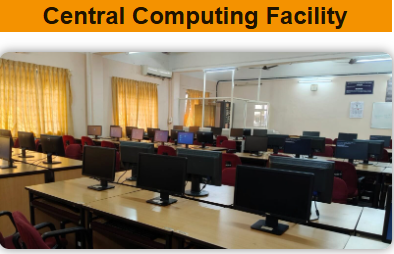 The Central Computing Facility is a spacious and well-equipped hall with a large number of computers, projection facilities, and modern learning resources. It also features a dedicated platform for conducting live interactive classes, demonstrations, presentations, and group discussions. The facility provides an ideal environment for technology-enabled learning, collaboration, and academic activities.
The Continuing education activities of the college are being coordinated by the Research and Enhanced Education (R&Ee) Forum. The forum helps in extending the expertise and infrastructure of the college to the benefit of the public in addition to the students of LBSITW. The forum conducts short-term training programs in various areas of Electronics and Computer Science to the students of LBSITW and for outsiders. The R&Ee forum helps in generating revenue for the college and also enables faculty members update themselves with the cutting edge of technology.
LBS Institute of Technology for Women (LBSITW) is one of the premier engineering institutions in Kerala, offering on-campus accommodation for up to 400 students. The hostel, located within the college premises, provides a safe, secure, and fully furnished environment conducive to both academic and personal growth.Priority for hostel admission is given based on the distance between a student’s hometown and the college, ensuring a fair and need-based allocation.The hostel is governed by a Hostel Warden, a faculty member appointed by the Principal. The Warden is supported by a team consisting of Resident Tutors and Matrons, all working together to ensure the well-being, safety and comfort of the hostel inmates.The hostel is a peaceful and serene space that fosters learning, extracurricular engagement and mutual care among students. It provides an environment that encourages holistic development.